Vines strangle carbon storage in tropical forests

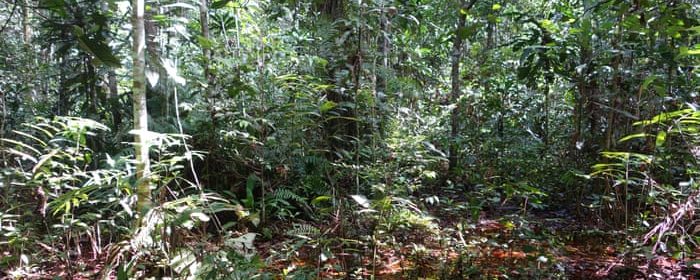
Tropical forests account for a third of the total carbon fixed by photosynthesis. Lianas’ increasing abundance may be driven by changing climate, increased disturbance or by more severe seasonal drought. By reducing the ability of tropical forests to accumulate and store carbon released through burning fossil fuels, lianas could cause a positive feedback loop, accelerating climate change. “This study has […]

Read more

Antarctic ice sheet is more vulnerable to carbon dioxide than expected

Results from a new climate reconstruction of how Antarctica’s ice sheets responded during the last period when atmospheric carbon dioxide (CO2) reached levels like those expected to occur in about 30 years, plus sediment core findings reported in a companion paper, suggest that the ice sheets are more vulnerable to rising atmospheric CO2 than previously thought. Details appear in two […]

Read more

JET STREAM STALLS AT CLIMATE CHANGE

Jet Stream - Antarctica Journal

Climate change, not just increasing atmospheric temperatures, has been affecting the Jet Stream.   When the Jet Stream travels across from the West to the East over the Northern Hemisphere in normal conditions the weather is not greatly affected, but because of the climate change it has been slowing down and causing massive heat waves and flooding.   When the jet stream […]

Read more

Warming adds to pressure on bats

Across the world, bats are in trouble from climate change – not only through collisions with the wind turbines that are intended to mitigate its effects, but from what the increasing warmth does to their ability to find their prey. Bats often get a bad press, portrayed as disease-spreading bloodsuckers. In fact, they perform a vital role as pollinators, seed […]

Read more

EARTHS CARBON DIOXIDE LEVELS REACH HISTORIC HIGH

EARTHS CARBON DIOXIDE LEVELS REACH HISTORIC HIGH

Climatologists found that the carbon dioxide levels have risen so high that they could have catastrophic consequences to our life on the planet earth.  Prior to the 18th century the levels were averaging about 280 ppm (parts per million).  The Industrial Revolution began burning fossil fuels which sent more carbon dioxide into the atmosphere.  They are predicting that our carbon […]

Read more

Evergreen Trees at risk in Southwest U.S.

Evergreen trees

A research paper published in Nature Climate Change predicts widespread death of needleleaf evergreen trees (NET) within the Southwest United States by the year 2100 under projected global warming scenarios. The research team that conducted the study, which includes University of Delaware’s Sara Rauscher, considered both field results and a range of validated regional predictions and global simulation models of […]

Read more

Renewables offer quick fix for US emissions

The US could reduce greenhouse gas emissions from electricity generation by 80% below 1990 levels within 15 years just by using renewable sources such as wind and solar energy, according to a former government research chief. The nation could do this using only technologies available right now, and by introducing a national grid system connected by high voltage direct current […]

Read more

Planet Has More Trees

Planet Has More Trees

The last study showed that the world has about 3 trillion trees.  That is over the estimate of 400 billion in previous studies.  Researchers did a count by actually going out and physically counting trees, using satellite imagery, ground survey, and national forest inventories.  Even though we have lost trees from fires, drought, and insect outbreaks there are still more […]

Read more
1 7 8 9 10 11 12