A monster black hole

An international team of astronomers has detected a colossal black hole that is 12 billion times more massive than the sun—so big that it is challenging accepted cosmological thinking. Scientists discovered the enormous celestial body, which is 12.8 billion light-years from Earth, at the center of a brilliantly glowing quasar, a cloud of gas that gets superheated and gives off […]

Read more

Humans settled, set fire to Madagascar’s forests 1,000 years ago

There’s no question that our species has had a dramatic impact on the planet’s physical environment, particularly over the last few centuries, with the rise of modern industry, transportation, and infrastructure. But as new research shows, humans have been transforming the landscape, with lasting impacts, since long before the start of the Industrial Era. Scientists from MIT and the University […]

Read more

Ancient Boiling Oceans

In its early days, Earth became hell. About 3.3 billion years ago, new research indicates, at least two massive asteroids 30 to 60 miles in diameter smashed into this planet, boiling the oceans and sending atmospheric temperatures soaring to an unimaginable 932 degrees Fahrenheit. Stanford University scientists have found evidence of this extreme era in a geological formation in South […]

Read more

Oklahoma – The New Earthquake Epicenter

Oklahoma - The New Earthquake Epicenter

America’s earthquake epicenter was once California. Now it’s Oklahoma. In 2014 there were nearly 300 times as many magnitude 3.0 and greater earthquakes as there were in 2008—and more quakes of that magnitude than in the prior 30 years combined. The cause? Scientists can’t say definitively, but new research funded by the U.S. Geological Survey notes that as quakes increased […]

Read more

Chimps: Natural-born killers

Why do chimpanzees kill one another? For years, many studies have shown that chimps that were observed killing one another had become more aggressive only when humans encroached on their environment. But new studies have lent weight to an alternative theory: Chimpanzees are, like humans, natural-born killers who use violence as a means of expanding their territory and increasing their […]

Read more

Neanderthals—the other white meat

Neanderthals, a sturdy hominid species closely related to Homo sapiens, lived in Europe for about 270,000 years until humans arrived on the continent, about 30,000 years ago, at which point they quickly disappeared. The latest theory for their puzzling extinction is that humans exterminated, and maybe even ate, their Neanderthal cousins. French anthropologist Fernando that the bacterial disease was present […]

Read more

Study: Painkillers Dull Pleasure

Every week, more than 50 million Americans take acetaminophen, the active ingredient in Tylenol and many other popular painkillers, to ease their aches and pains. But a new study has revealed that the drug also dulls emotions—including happiness. Prior research showed that acetaminophen can help take the sting out of negative feelings like dread, but the new findings from Ohio […]

Read more

Nasa: Antarctic ice-shelf will be gone by 2020

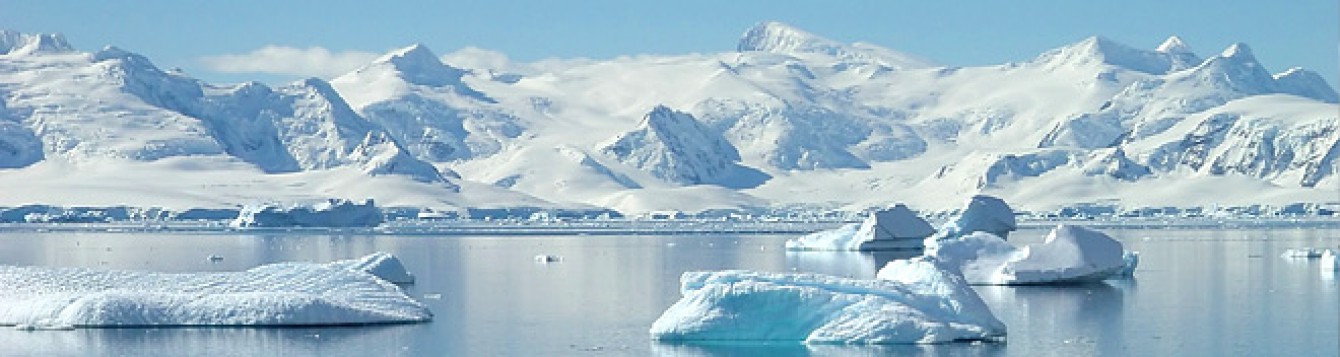
According to a new study by Nasa, Antarctica’s Larsen B ice-shelf is on course to completely disintegrate within the next five years. Studies show that the 10,000-year-old ice shelf, after partially collapsing in 2002, is “quickly weakening.” “These are warning signs that the remnant is disintegrating,” said Ala Khazendar of Nasa’s Jet Propulsion Laboratory (JPL) in Pasadena, California. “Although it’s […]

Read more
1 2 3 16