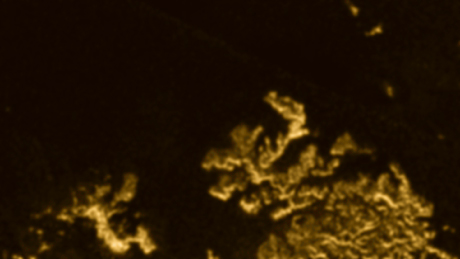
The Mysterious ‘Magic Island’ on One of Saturn’s Moons
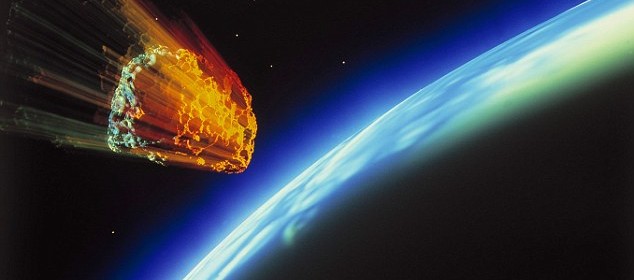
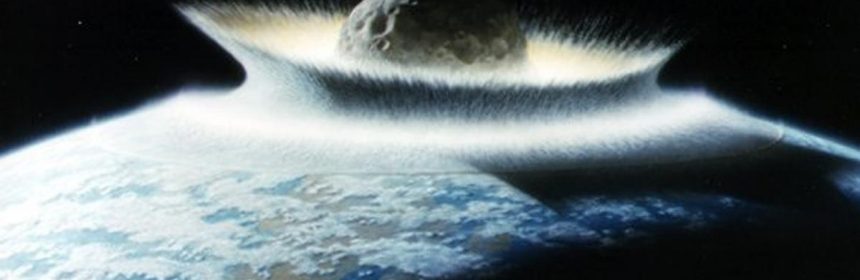
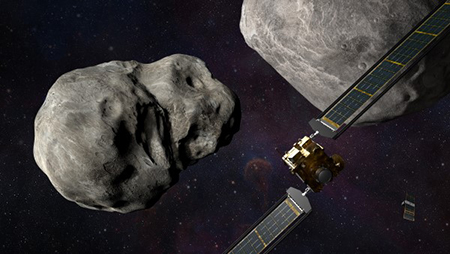
NASA has initiated the DART mission, short for Double Asteroid Redirection Test. It was launched from Vandenberg Space Force Base, California to study the effects of asteroid deflection as a method to save the Earth from future devastating collisions by asteroids. The big question…. If an asteroid is pummeling towards Earth, can humanity be saved with a simple nudge? NASA […]
Read more
People always wonder how the moon was made. The birth of the planets 4.5 billion years ago was extremely violent. They grew to full size by absorbing rival planet embryos in a series of titanic collisions—one of which probably gave Earth its moon (below). The moon’s large size, low density, and other features suggest that it emerged from an explosion […]
Read more
Astrobiologists searching the heavens for extraterrestrial life have a simple motto: “Follow the water, ”says The Washington Post. Water is an essential ingredient in all earthly biochemistry, so scientists believe it’s logical to look for life first on planets and moons with liquid water.New data from NASA’s Cassini spacecraft indicate that Enceladus, a tiny, ice-encrusted moon orbiting Saturn, may be […]
Read more
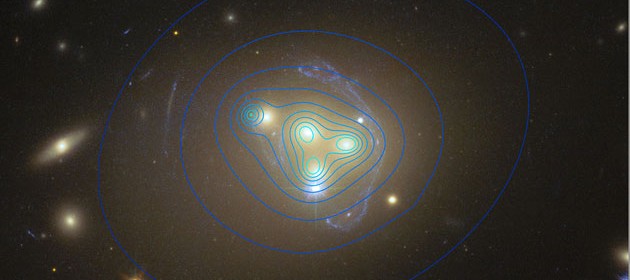
Scientists typically believe that dark matter behaves in a simple way: if one clump encounters another, the two interact solely through gravity. However, researchers have published findings which suggest that there’s more involved. They’ve noticed dark matter (the blue lines in the photo above) lagging behind a galaxy due to friction, hinting that there are factors beyond gravity at work. […]
Read more
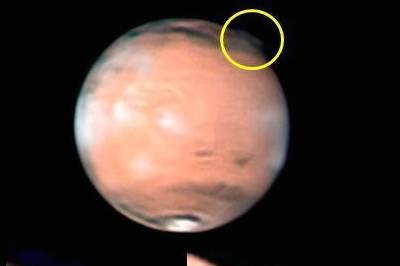
Astronomers have found the strongest evidence yet that ancient Mars had a massive ocean for millions of years— an indication that the Red Planet once had everything necessary to support life. Shortly after Mars formed 4.5 billion years ago, NASA scientists say, the planet was wet, with enough water to cover the entire planet to a depth of about 450 […]
Read more
Earth may owe its existence to the planet Jupiter. New research shows that the giant planet played a key role in the formation of the solar system by barreling through it like a cosmic wrecking ball, destroying existing planets and creating debris that coalesced into new ones, including ours. Astronomers began examining this theory after finding that virtually all of […]
Read more
For the first time, a mission designed to set its eyes on black holes and other objects far from our solar system has turned its gaze back closer to home, capturing images of our sun. NASA’s Nuclear Spectroscopic Telescope Array, or NuSTAR, has taken its first picture of the sun, producing the most sensitive solar portrait ever taken in high-energy […]
Read more
Scientists from the University of Delaware’s Bartol Research Institute in the Department of Physics and Astronomy have discovered very-high-energy gamma rays in the Cigar Galaxy (M82), a bright galaxy filled with exploding stars 12 million light years from Earth. The gamma rays observed by the team have energies more than a trillion times higher than the energy of visible light […]
Read more